
Large Format Scanning In Wisconsin
- Large format scanning for blueprints, maps, engineering drawings, and wide-format originals in Wisconsin
- Serving Wisconsin businesses, contractors, engineers, architects, agencies, and organizations that need secure conversion of large format records into usable digital records
- Secure handling from intake through final digital delivery
- High-resolution, true-to-scale digital files with JPEG, PDF, and TIFF options
- Straightforward flat-rate project planning
- Scalable service from selected drawings to full archive conversions
- Request your FREE QUOTE today
Connect With Us: (888) 544-5221
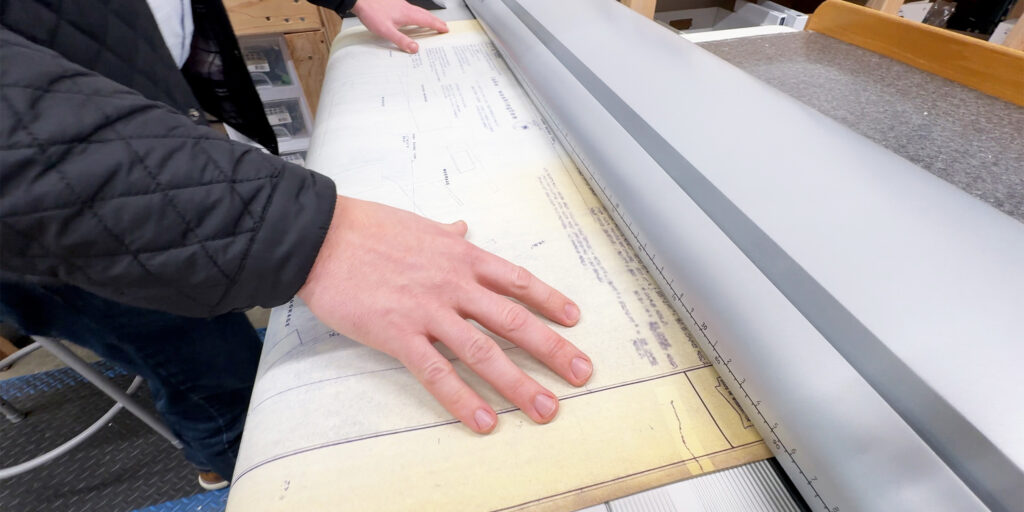
Large Format Scanning into Organized Digital Files in Wisconsin
Aging plans and maps are easier to protect when high-quality digital copies are organized for everyday access. Liberty Scanning provides professional large format scanning services throughout Wisconsin, helping businesses, government agencies, engineering firms, architects, contractors, and organizations convert large paper records into high-resolution, usable digital records.
Wisconsin archives document manufacturing, food production, healthcare, campuses, utilities, transportation, municipalities, and lakefront facilities. Whether the archive includes manufacturing plans, food-production drawings, campus maps, or lakefront facility records, specialized wide-format equipment captures lines, color, notes, and fine detail with clarity.
Quick answer: Large format scanning converts oversized originals—such as blueprints, maps, engineering plans, architectural drawings, and posters—into high-resolution digital files. For Wisconsin projects, Liberty Scanning combines controlled handling, capture inspection, practical file organization, and secure digital return.
Precision Large Format Document Scanning
Traditional office scanners are not designed for oversized records. Our specialized equipment safely digitizes large-format materials while preserving image quality and protecting originals throughout the process.
We regularly scan:
- Architectural drawings
- Engineering plans
- Construction blueprints
- Maps and site plans
- Survey documents
- Utility maps
- Aerial photographs
- Technical drawings
- Artwork and posters
- Historical oversized records
Every document is carefully handled to produce accurate, high-resolution digital reproductions.
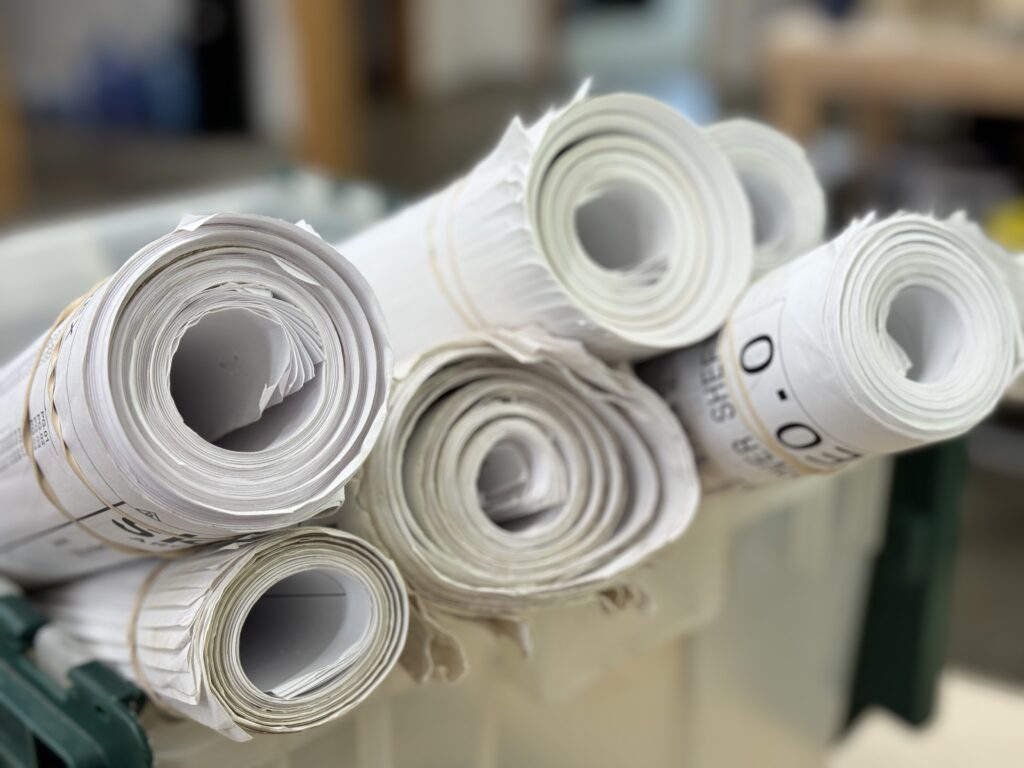
Large Format Scanning Made Simple
Each engagement starts with a clear inventory conversation covering sizes, condition, output needs, and organization goals. Our team confirms document type, size, condition, color requirements, naming priorities, and final file use before production begins.
Our large format scanning services help you:
- Preserve aging and fragile documents
- Eliminate oversized paper storage
- Improve document accessibility
- Share files with teams and clients
- Protect records from loss or damage
- Build organized digital archives
- Reduce time spent searching physical records
- Support paperless workflows
The result is a searchable, shareable collection that reduces repeated handling of valuable originals. From selected drawings to full archive conversions, we deliver consistent, high-quality results.
A Clear Large Format Scanning Process for Wisconsin
- Scope review: confirm quantities, sizes, condition, color, resolution, naming, and delivery needs
- Secure intake: coordinate project logistics and document the archive before production
- Scanning and quality control: capture originals, review legibility and orientation, and apply the agreed naming or indexing
- Digital delivery: provide organized PDF, TIFF, or JPEG files ready for your archive, project team, or document system
If the same project includes standard-size records, our document scanning services can be discussed as part of a coordinated plan. Liberty Scanning’s no-outsourcing policy explains how scanning production is handled.
Planning a Useful Digital Archive in Wisconsin
Scoping manufacturing plans in Milwaukee
A manufacturing plans archive in Milwaukee may be organized by property, asset, discipline, or drawing number. The right choice depends on how staff search today and which information appears consistently on the originals. We review representative sheets before production so indexing effort is directed toward fields that can actually support reliable retrieval.
Preserving detail for work in Madison
food-production drawings from Madison may contain fine annotations, color coding, stamps, or scale-dependent information. Capture settings should match the planned use instead of relying on one default for every sheet. If files will be referenced on screen, printed, archived, or imported elsewhere, those requirements can be documented at the start.
Separating active and historical records in Green Bay
Teams near Green Bay sometimes need active drawings separated from historical material, while a Kenosha archive may be arranged by site or department. A clear inventory prevents those groups from becoming mixed during digitization. It also helps define which duplicates, cover sheets, or revision markers should be preserved in the Wisconsin delivery.
Supporting access from Racine through Eau Claire
A statewide collection may need to serve staff in Racine, Appleton, Waukesha, and Eau Claire without repeated handling of the originals. Consistent names and folders give users a predictable path to campus maps and lakefront facility records. We can align delivery with an existing archive structure or help establish a simple new one.
Questions to settle before scanning Wisconsin drawings
For manufacturing plans tied to Milwaukee, decide whether project numbers or facility names should lead the digital structure. If food-production drawings from Madison uses several numbering systems, identify the one users recognize most reliably. A reviewer in Green Bay may search by revision, while staff in Kenosha may start with a site or department. These choices shape useful filenames.
Managing physical condition across Wisconsin
campus maps stored near Racine may be flat and current, but related originals from Appleton could be rolled, folded, brittle, or marked in the field. Noting those differences helps establish preparation and handling. When lakefront facility records from Waukesha includes fragile sheets, the workflow can protect those records without applying unnecessary steps to sturdier material from Eau Claire.
Matching digital formats to Wisconsin workflows
A Milwaukee facilities group may prefer multipage PDFs for quick reference, while a Madison design team may need separate TIFF or JPEG images for downstream use. manufacturing plans and campus maps do not always belong in the same delivery pattern. By connecting each Wisconsin record group to its use, the final format plan remains practical and easier to explain.
Keeping indexes consistent from Green Bay to Appleton
When a Green Bay title block names assets differently from a Kenosha title block, a customer-approved crosswalk can preserve both the source wording and a consistent digital label. That approach may also help Racine and Appleton users retrieve food-production drawings without knowing every historical abbreviation. We document the selected convention so naming remains repeatable throughout production.
Preparing for long-term access in Wisconsin
The needs of a current Waukesha project may differ from a historical Eau Claire archive. Active lakefront facility records may be opened frequently, while older manufacturing plans may primarily support research, reference, or risk reduction. Separating those use cases allows Wisconsin organizations to prioritize resolution, color, naming depth, and folder structure according to the value and expected use of each group.
Benefits of Large Format Scanning & Digital Delivery
Digitizing large originals can reduce bulky storage while improving access, security, collaboration, and long-term preservation. Final files are structured to support day-to-day use and organized archiving.
- High-resolution digital imaging
- True-to-scale reproductions when specified
- Faster document retrieval
- Easier collaboration across teams
- Reduced dependence on physical storage
- Long-term document preservation
- Secure digital backups
- Simplified sharing and distribution
Files can be delivered as PDF, TIFF, or JPEG and arranged by project, property, department, drawing number, date, revision, or another customer-supplied convention.
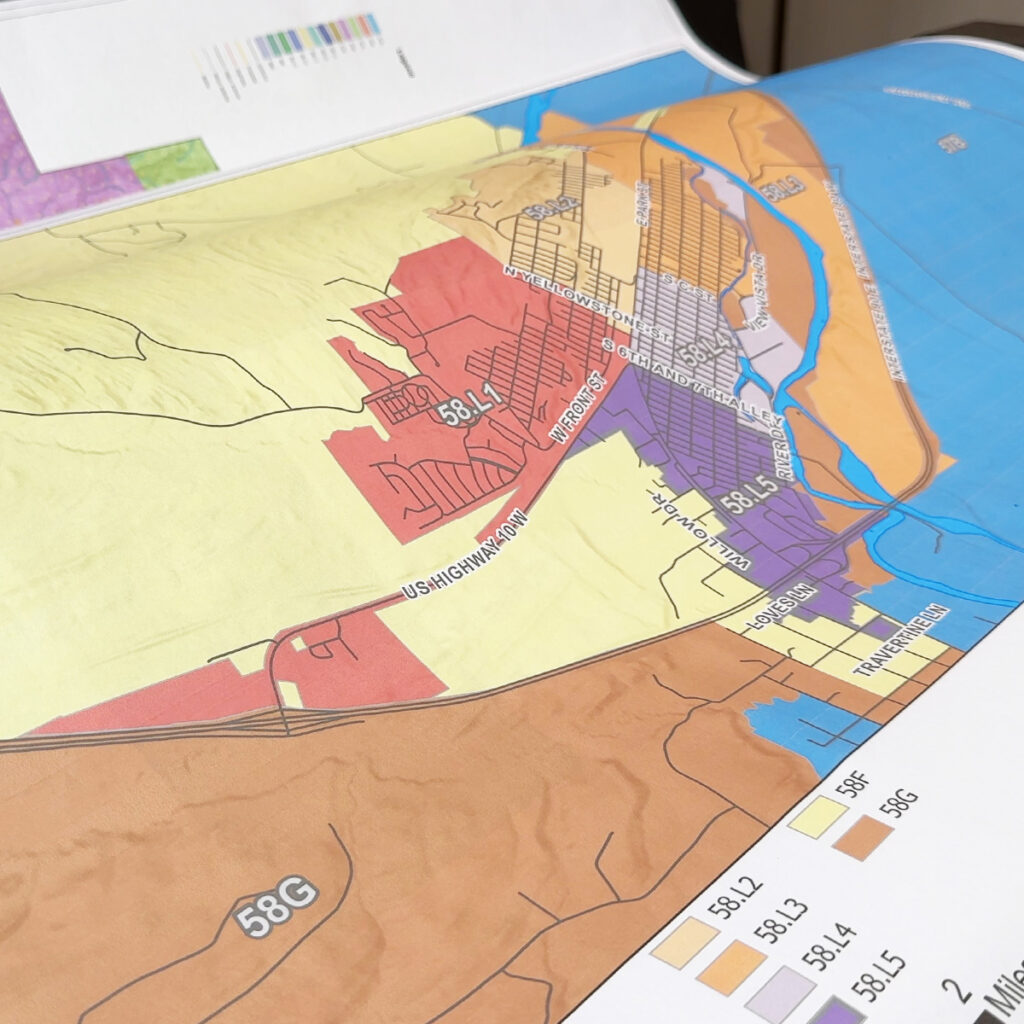
Secure Handling & The Liberty Scanning Advantage
Large format records are handled with care from intake through final delivery. Capture settings, file structure, and quality-control steps are aligned with the agreed project requirements.
You receive:
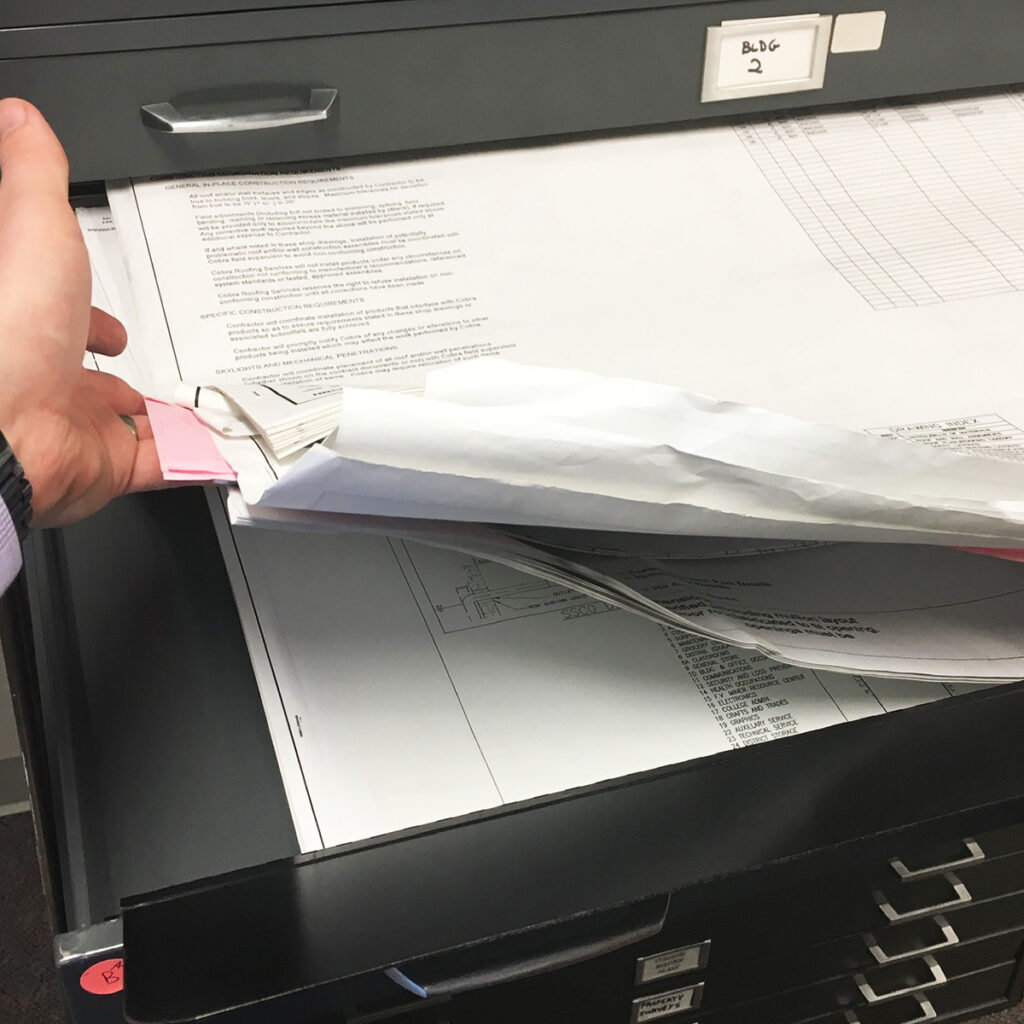
- High-resolution large format scanning
- True-to-scale digital reproductions when requested
- Secure project handling
- Organized file naming and structure
- Flexible output and delivery options
- Projects sized to the archive
- A clear flat-rate quote before work begins
- Scanning work that is not outsourced
Every project receives careful attention so oversized records remain protected, preserved, and easier to access after scanning.
Simple Flat-Rate Project Planning
We keep pricing straightforward. After reviewing the archive and desired output, Liberty Scanning provides a clear flat-rate project quote. Request a free quote or contact Liberty Scanning to get started.
Cities We Serve in Wisconsin
We coordinate large format scanning projects across Wisconsin, including Milwaukee, Madison, Green Bay, Kenosha, Racine, Appleton, Waukesha, Eau Claire, as well as neighboring communities.
Milwaukee
Madison
Green Bay
Kenosha
Racine
Appleton
Waukesha
Eau Claire
Nearby State Resources
Partner with Liberty Scanning
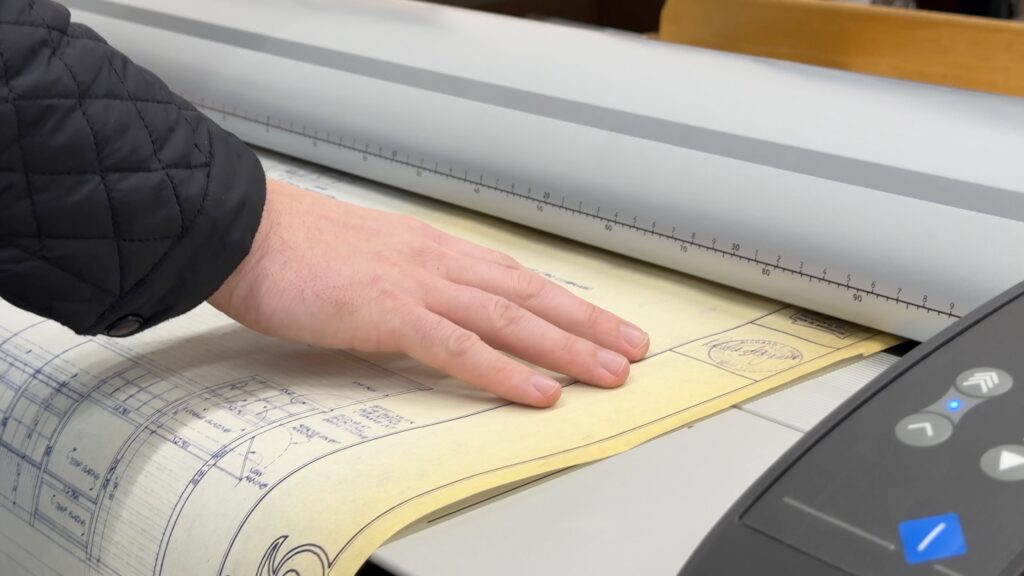
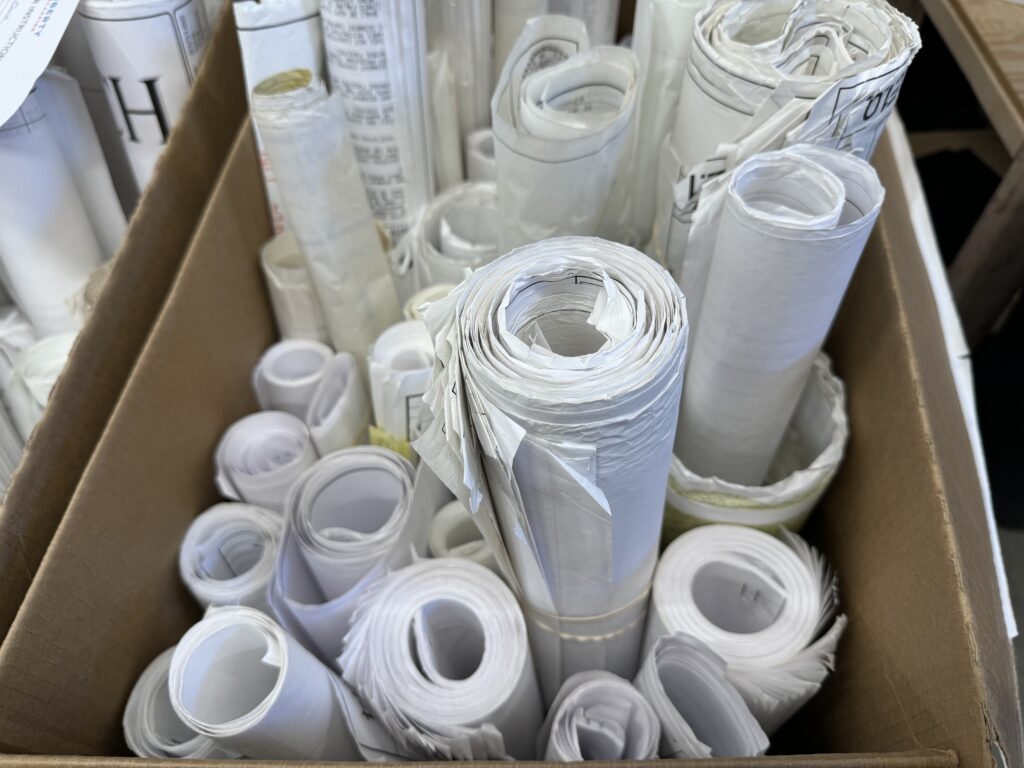

Looking for reliable shredding, scanning, records storage, media conversion, or cloud services? Contact Liberty for a free, no-obligation quote and help selecting the right solution.
Large Format Document Scanning FAQ
What wide-format originals can Liberty Scanning digitize in Wisconsin?
We scan blueprints, architectural and engineering drawings, maps, site plans, utility drawings, posters, artwork, aerial photographs, and other oversized records for Wisconsin organizations.
Can large format documents be captured at their original size?
Yes. Wide-format equipment captures the complete original while preserving fine lines, annotations, scale information, and image detail. Output specifications are confirmed before production.
Which digital file formats are available?
Common delivery formats include JPEG, PDF, and TIFF. We can discuss color, resolution, multipage organization, naming, and indexing based on how your team will store and use the completed records.
How are blueprints, maps, and plans handled?
Documents are tracked through intake, scanning, capture inspection, and delivery. Originals are handled carefully, and Liberty Scanning does not outsource digitization production.
How does flat-rate pricing work for a large format project?
After reviewing the scanning scope, Liberty Scanning provides a clear flat-rate quote so planning stays simple. Ask us for a free quote based on your collection and delivery needs.
Do you support large format scanning projects across Wisconsin?
Yes. We coordinate large format scanning projects for organizations across Wisconsin, including Milwaukee, Madison, Green Bay, Kenosha, Racine, and nearby communities. Contact us to discuss logistics for your location.