
Bank & Credit Union Document Scanning
Bank and credit union document scanning converts loan files, account records, signature cards, audit materials, and archived financial documents into organized, searchable digital files. Liberty Scanning helps banks, credit unions, lenders, and financial service teams reduce paper storage, retrieve records faster, and maintain accountable document workflows. Request a free, no-obligation quote for a project designed around your institution.
Make Financial Records Easier to Find and Manage
Financial institutions create and retain records across lending, deposit operations, member or customer service, accounting, human resources, facilities, legal, and executive administration. When those documents remain in cabinets, branch storage rooms, or off-site boxes, routine retrieval can become slow and inconsistent. Bank and credit union document scanning replaces paper-dependent searches with an organized digital archive built around the way authorized employees locate information.
Document Scanning Designed Around Your Institution
A community credit union may organize member records differently from a regional bank, mortgage lender, or trust department. Liberty Scanning begins by reviewing record types, volume, document condition, retrieval needs, indexing rules, file formats, and final disposition instructions. The resulting workflow can preserve an existing filing structure or introduce a more consistent digital organization approved by your team.
Our services include document preparation, high-resolution scanning, optical character recognition, indexing, manual quality control, and organized digital delivery. OCR can make legible printed text searchable, while filenames and metadata help employees locate records using defined fields. Visit our document scanning service page for an overview of supported formats and project sizes.
Banking and Credit Union Records We Scan
- Consumer, commercial, mortgage, and home-equity loan files
- Account-opening documents, applications, agreements, and signature cards
- Member and customer correspondence, service requests, and notices
- Collateral, title, appraisal, underwriting, and closing documentation
- Transaction-support records, deposit operations files, and reconciliations
- Audit workpapers, examination support files, policies, and procedures
- Vendor contracts, branch records, facilities documents, and project files
- Accounting, tax, trust, legal, human resources, and administrative records

Controlled Handling for Sensitive Financial Information
Bank and credit union files can contain account information, identification records, signatures, financial histories, tax documents, and other confidential material. A scanning project therefore requires controlled custody, documented accountability, and defined access—not simply fast image capture.
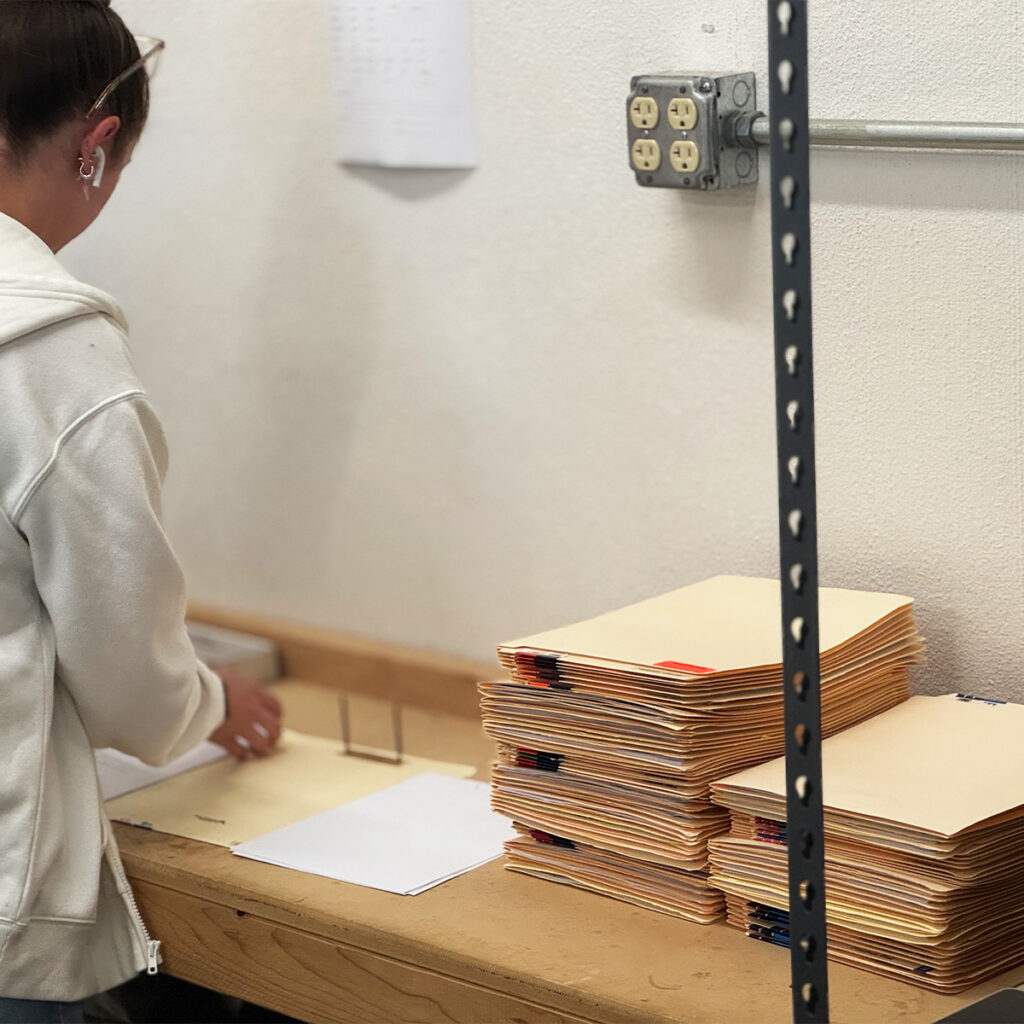
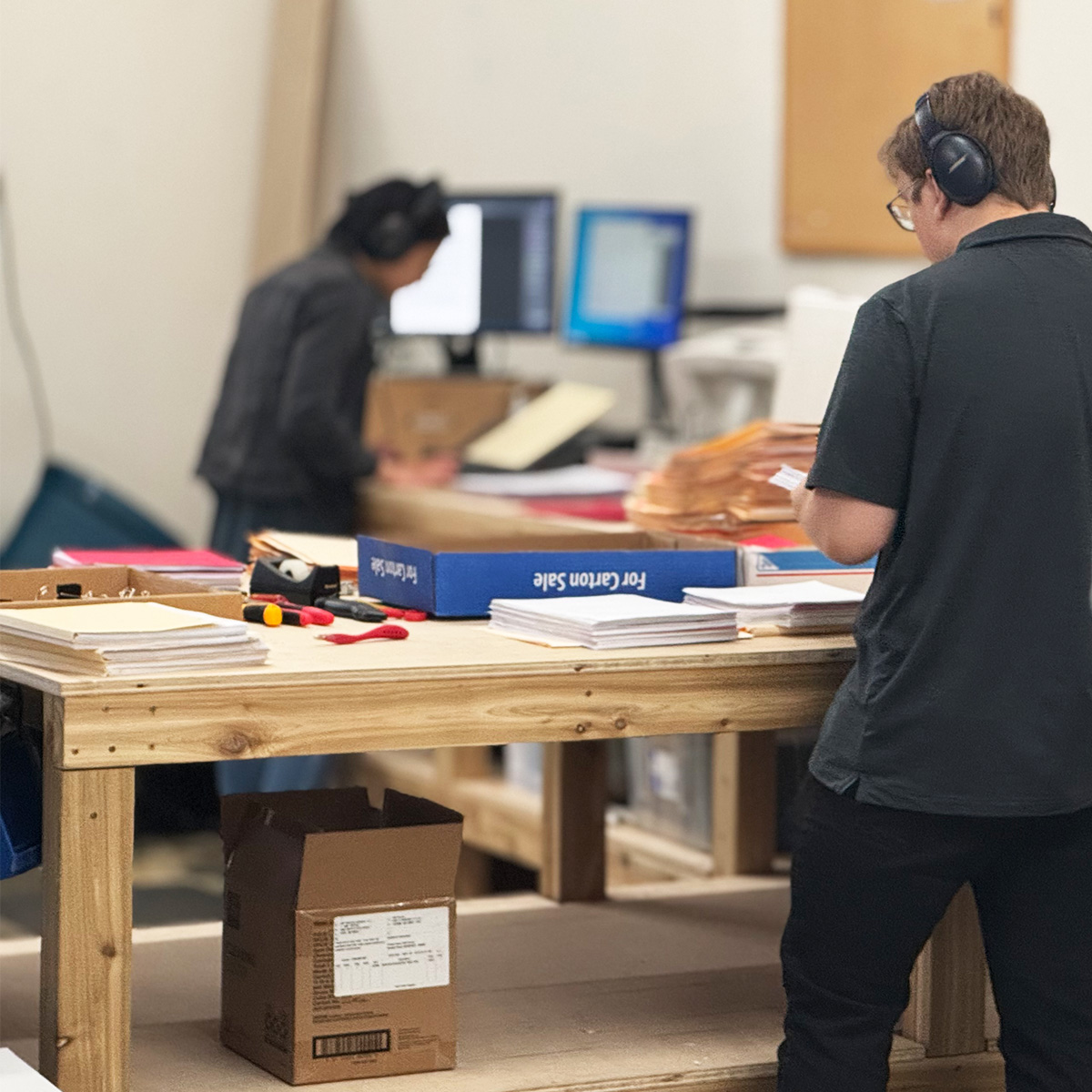
Liberty Scanning uses documented chain-of-custody procedures, barcode tracking, in-house indexing, and manual quality control. These controls help establish visibility from document transfer through preparation, scanning, verification, digital delivery, and final disposition. Project details are agreed in advance so your institution understands how records will be organized, transferred, processed, and returned or destroyed.
Support Governance, Retention, and Examination Readiness

An organized digital archive can support a financial institution’s internal privacy, retention, audit, examination, litigation-hold, and information-governance programs.
- Define the records included in the project and the department responsible for each category.
- Separate active, inactive, duplicate, and disposition-eligible documents according to approved instructions.
- Select index fields that reflect authorized retrieval and reporting needs.
- Choose digital formats and folder structures compatible with the destination environment.
- Document quality-control results and final-disposition decisions for accountability.
Your institution remains responsible for identifying the laws, regulations, contracts, retention schedules, and internal policies that apply to its records. Liberty Scanning configures the production workflow to support the documented requirements your organization provides.
Convert File Rooms and Archived Boxes
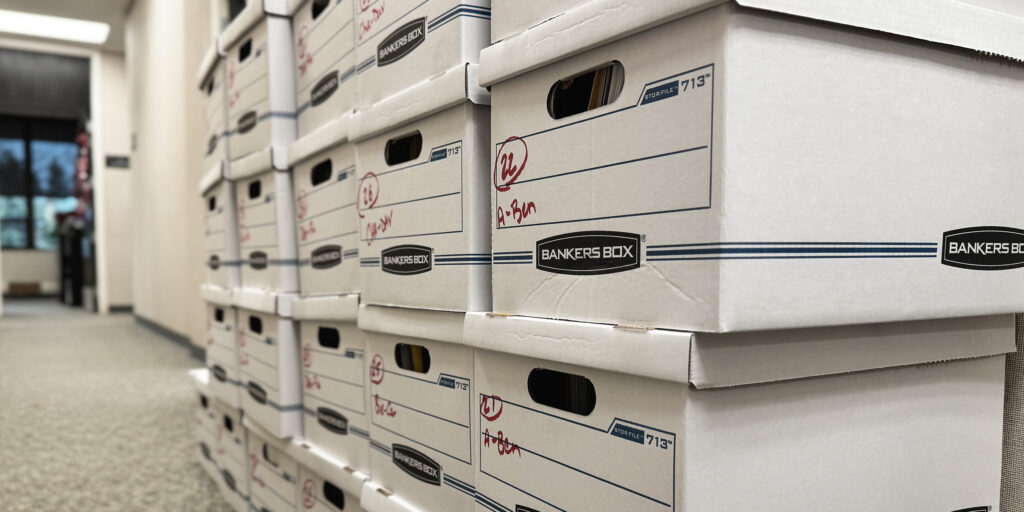
Legacy files often accumulate across branches, operations centers, acquired institutions, and off-site storage. A conversion project can address one closed loan portfolio, a group of inactive member files, or an entire archive. Liberty Scanning handles projects ranging from individual folders to filing cabinets and large collections of banker’s boxes.
During preparation, fasteners can be removed, damaged pages addressed, and document order preserved according to project instructions. After scanning, files are indexed and reviewed before delivery. Learn more about banker’s box scanning and Liberty’s auditable file-box scanning workflow.
Indexing That Matches Banking Workflows
The right index depends on the record series and approved access model. Loan files may be organized by loan number, borrower, product, branch, status, or closing date. Account records may use member or customer identifiers, account type, document category, and effective date. Audit or policy files may rely on department, business process, reporting period, owner, and version. Liberty Scanning applies the indexing plan your institution approves.
Common delivery formats include searchable PDF, PDF/A, TIFF, JPEG, and other formats selected for the destination system. OCR can recognize printed text in legible source documents, while structured filenames and metadata improve consistent retrieval across large collections.
- Organize records by branch, department, record series, and date
- Apply approved account, member, customer, loan, or document identifiers
- Create searchable files for faster authorized retrieval
- Deliver a predictable folder structure for import or secure storage
For more information about OCR, indexing, available file formats, and document disposition, review the Liberty Scanning FAQ.

A Clear Document Conversion Process
- Discovery: Review record types, volume, condition, locations, access needs, and the desired digital outcome.
- Project design: Confirm preparation rules, image specifications, indexing fields, file formats, and quality criteria.
- Secure transfer: Arrange collection or shipping according to location, volume, schedule, and handling needs.
- Preparation and scanning: Prepare documents, preserve the agreed order, and capture clear digital images.
- Indexing and quality control: Apply the approved structure and verify legibility, orientation, completeness, and organization.
- Delivery and disposition: Deliver the completed archive, then return, store, or securely destroy originals according to written instructions.
Banking Organizations We Serve
Liberty Scanning supports community banks, regional banks, credit unions, mortgage lenders, loan servicers, trust departments, financial service companies, bank holding companies, branch networks, operations centers, and institutions managing records from mergers, acquisitions, consolidations, or facility closures.
Bank & Credit Union Document Scanning FAQ
What is bank and credit union document scanning?
It is the conversion of paper financial institution records into organized digital files. Documents can be prepared, scanned, indexed, quality checked, and made text-searchable with OCR when source quality permits.
What banking documents can Liberty Scanning digitize?
Common projects include loan files, account-opening records, signature cards, member or customer correspondence, audit materials, policies, vendor files, branch records, and archived administrative documents.
Can scanned financial records be searchable?
Yes. OCR can make legible printed text searchable. Files can also be named and indexed by approved fields such as branch, department, record type, loan number, account identifier, and date.
How are sensitive banking records handled?
Liberty Scanning uses documented chain-of-custody procedures, barcode tracking, controlled handling, in-house indexing, and manual quality review throughout the conversion workflow.
Can you scan records from multiple branches or acquired institutions?
Yes. A project can include records from multiple locations. Transfer, labeling, tracking, indexing, and delivery rules are documented so each collection remains identifiable throughout processing.
What digital file formats are available?
Common options include searchable PDF, PDF/A, TIFF, and JPEG. The appropriate format depends on the destination system, long-term use, image requirements, and accessibility needs.
What happens to the original records after scanning?
After quality control and institutional approval, originals can be returned, stored, or securely destroyed according to written disposition instructions and applicable retention requirements.


Request a Free Quote
Whether your institution needs to convert one inactive loan portfolio, digitize records from several branches, or address a full archive, Liberty Scanning can build a controlled workflow around your requirements. Start with a free project review and a transparent, no-obligation quote. Visit our request a quote page or call to discuss your bank or credit union document scanning project.